Album of the week: Paris Paloma – 'The Fatal Flaw'
Paris Paloma's second album is 'learned, art-soaked, culture-savvy and assiduously thought-provoking,' as Craig McLean discovers


Paris Paloma’s gaze – female, male, all points in between and around – roams far, wide and deep on her second album. The Brighton-based singer-songwriter is backed and inspired by an army of followers, with seven million monthly listeners on Spotify. Their biggest passion is overwhelmingly focused on 2023 single ‘Labour’, the feminist anthem’s three-quarters-of-a-billion combined streams speaking to a raging hunger for big songs tackling both the millennia-deep pressure to be a “24/7 baby machine” and everyday sexism with extraordinary songcraft.
Now, her creativity let loose and wild, comes a record inspired by, variously and among other things, the foundational writings on intersectionality by bell hooks; the abstract paintings of Mark Rothko; the pre-Raphaelite poetry and art of Christina Rossetti and Dante Gabriel Rossetti; Greek mythology, as refracted through Pat Barker’s, The Women of Troy, specifically the “ancient inceldom” of Pyrrhus, son of Achilles; and Donna Tartt’s The Secret History, from the opening line of which The Fatal Flaw takes its title.
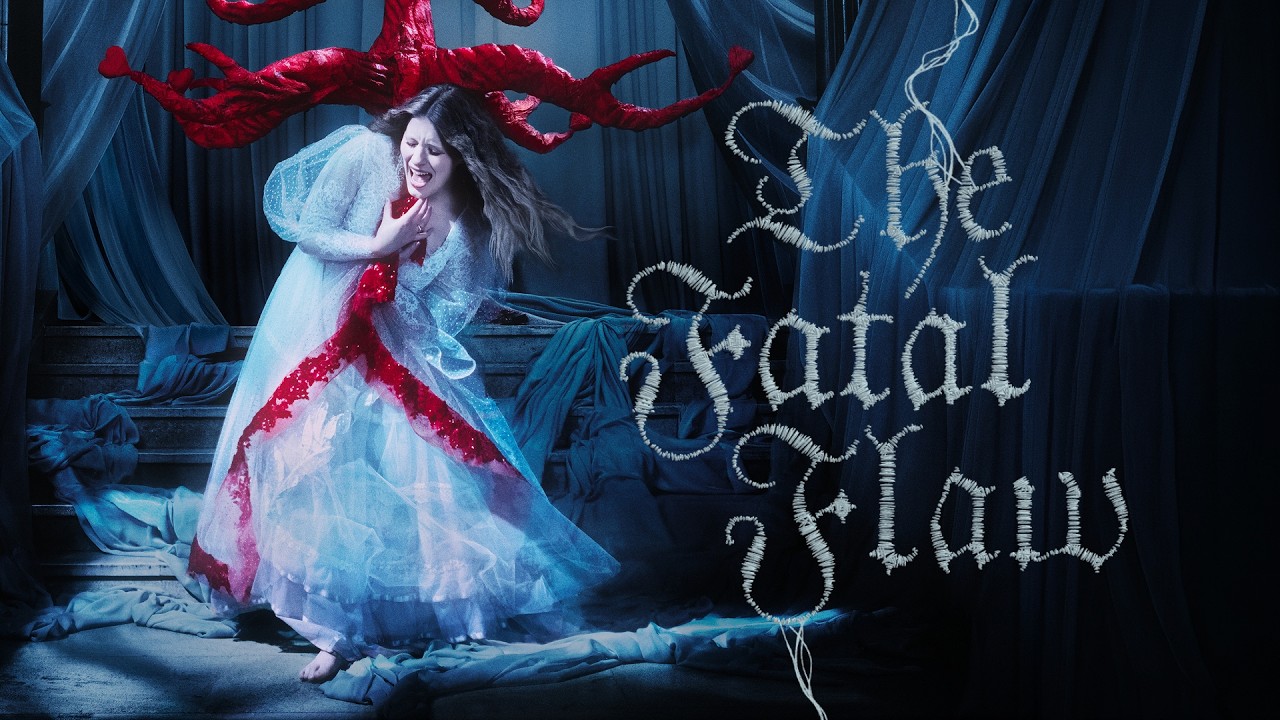
This, then, is a very learned, art-soaked, culture-savvy and assiduously thought-provoking collection of songs. But that never means stodge or pseudery; Paloma’s thoughts and theses are always shaped with poetic aplomb and irresistible melodicism. As she sings in the opening Miyazaki, her anti-AI hymn to the power of non-stop, non-slop human creativity: "I have something to say / As has anyone who’s ever made / Anything worth enjoying / Nobody can destroy it / Left unchecked it mutates / Bleeding desperation to create / Collapses me like a star / Sickness inside my heart”.
‘Pre-Raphaelite’ is a lung-bursting, life-giving arena-scale anthem of the type perfected by Florence Welch, with whom the 26-year-old has toured and with whom she undoubtedly has emotional, intellectual and soulful kinship. ‘Good Girl’ is a BPM-powered rage-rave hit (“if you call me good girl one more time, then my fist will meet your skull”) about body politics and commodification, its spoken-word intro glorying in its own intersectionality with the polemical power of Self Esteem.
Paloma can do quiet storm, too. The excellently titled ‘get her the fucking flowers’, a lower-case ballad of jaundiced romance, is an upper-case wonder, the verdant, pre-Raphaelite colours of the expertly arrayed guitars, pianos and strings leaving ample room for her gentlest, tenderest vocal.
On a brimmingly singalong album built from song hooks as much as bell hooks, Paloma finds space, time and again, for beautifully turned writing and deft construction. The towering ‘Good Boy’ opens with a statement – smart, wearied, aware, dismissive, empowered – from Emma Thompson. “I knew one day I’d have to watch powerful men burn the world down. I just didn’t expect them to be such losers,” the actor/writer says to appreciative laughter from a small audience of women. As Paloma explains of the song: “It is a message to men that you have more in common with me, more in common with everyday women, than you do with men in power pushing capitalist patriarchy, so don’t be their good boy.”
This man duly hears and endorses that, and professes his allyship – and his four-star enthusiasm. The Fatal Flaw is a big-thinking. big-swinging triumph.
![The Fatal Flaw [vinyl]](https://cdn.mos.cms.futurecdn.net/LVkcg5R33bUF5i24ruwSNN-1920-80.jpg.webp)
